


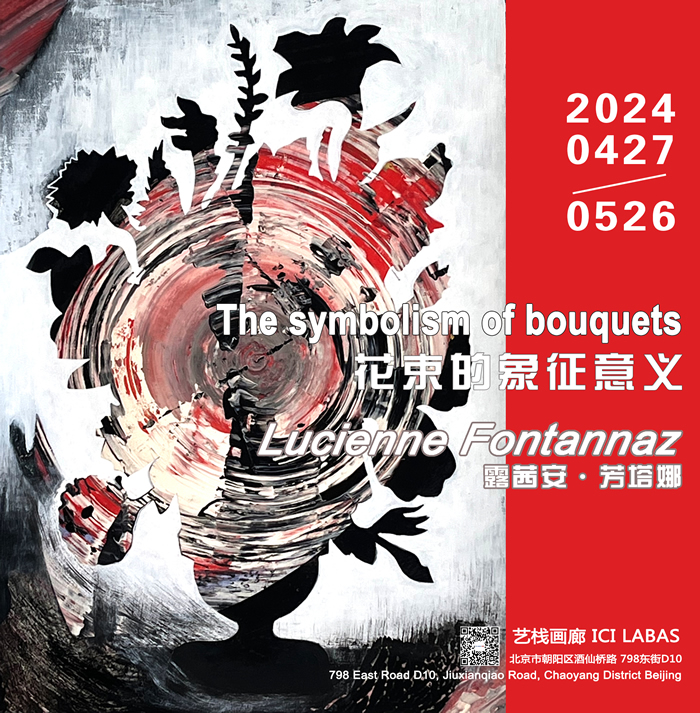
展览海报
展览名称:花束的象征意义——露茜安·芳塔娜个展
展览时间:2024年4月27日 - 2024年5月26日(周二-周日10:30 - 17:30,周一闭馆)
展览地点:艺栈画廊 ICI LABAS 北京市朝阳区酒仙桥路798东街
联系人:丁女士 13001170598
露茜安的个展将在北京艺栈画廊举办。这个题为《花束抄录》个展首次展出她最近创作的一系列绘画作品。虽然这些作品的主题“花束”是新颖的,但是这些作品无论按照何种顺序展示,都与她过去几年进行的创作和研究是延续的。露茜安的作品经典地呈现了事物的普遍性和特殊性,在这种语境下,她的作品诠释了对宇宙尺度的原始好奇以及对人类历史的评估,尤其是对女性的地位和角色的评估。最后,她用大量的抄本(附录或补充)来回应我们作为人类身体和人类思想中的个体,通常如何具体地处理人类生与死的高潮和低谷。 如果说,她早期的画作描绘了银河系的风景,这些特写镜头就充分地展示了思考人类命运的女性原型。最终,通过对我们的物理现实(每次添加一个抄本)看似的无限探索,这个主要的系列作品才得以呈现。
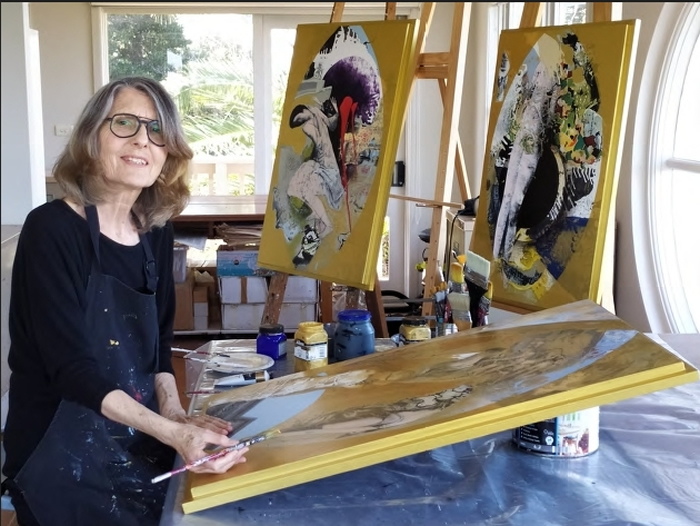
艺术家露茜安·芳塔娜 Lucienne Fontannaz
露茜安·芳塔娜出生于瑞士。她拥有艺术教育(加拿大康考迪亚大学)、艺术管理(澳大利亚新南威尔士大学)硕士学位和美术学研究硕士学位。2021年,她获得昆士兰艺术学院(澳大利亚格里菲斯大学)视觉艺术学的博士学位。露茜安曾在瑞士、加拿大、澳大利亚和中国教授艺术、展出她的绘画作品并且出版了书籍。她还曾担任若干大型艺术展览的策展人,展览主题包括历史性和当代原住民艺术以及涉及文化多样性、语言和身份的中国收藏和艺术。露茜安早期的绘画作品描绘了瑞士阿尔卑斯山和澳大利亚沙漠的风景,这些作品都受到地形和传统故事的启发。近年来,她的作品着眼于历史上和当今媒体中女性的刻板印象。
Lucienne Fontannaz is originally from Switzerland. She has master degrees in Art Education (Concordia University) and Art Administration (University of New South Wales) as well as a research Master of Fine Art degree (University of New South Wales). In 2021, she completed a Doctor of Visual Arts program at the Queensland College of Art (Griffith University). Lucienne has taught art, exhibited her paintings, and published books in Switzerland, Canada, Australia, and China. She has also worked as a curator of major art exhibitions on subjects such as historic and contemporary Aboriginal artworks, Chinese memorabilia and art addressing cultural diversity, language and identity. Lucienne’s earlier paintings depicted landscapes of the Swiss Alps and Australian desert scenery equally inspired by their topography and traditional stories. In recent years, her artworks have addressed the stereotypical representation of women, both historically and in to-day’s media.
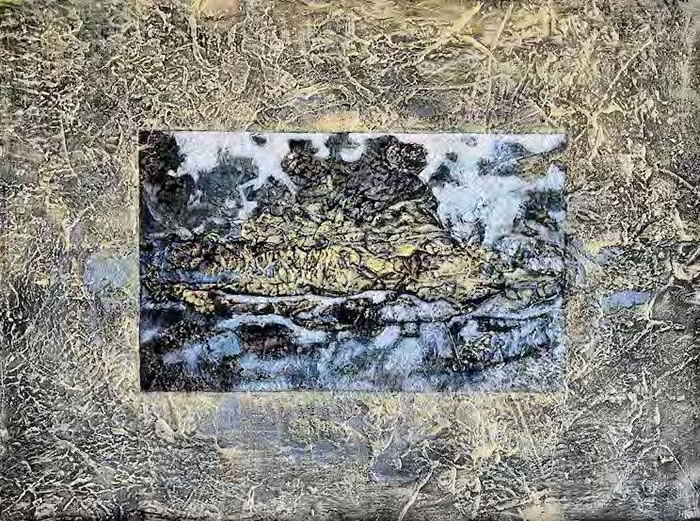
The Beginning of the Beginning 开始的初始 2021, 378 x 508mm acrylic paint on paper 丙烯、纸本
想象中的风景,原始的奇迹
这个系列绘画作品是关于物质之旅的幻想视觉叙事,是对原始景观实质性的探索海洋的广阔水域、其多岩石的岛屿、行星和地球表面下未知的黑暗或有时被开发的深处,穿过沙漠寻找土壤或心灵绿洲的阳光。除此之外,还有宇宙的浩瀚,它的行星,恒星,小行星,令人眼花缭乱的连续运动以及宇宙的熵。有时,小小的人物出现在里面,成为这个无限舞台上展开的故事之见证者。
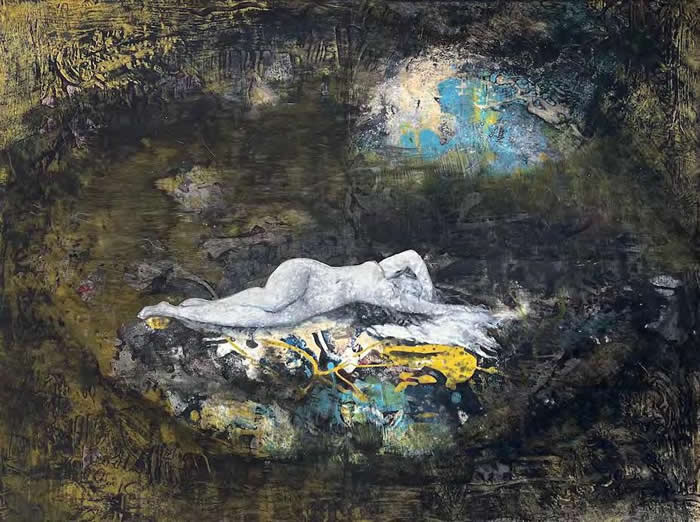
Venus Wakes on an Island of Debris 金星在一片废墟上醒来2021, 378 x 508mmacrylic paint on paper 丙烯、纸本
作为女性原型的人性
这些作品描绘了典型的女性形象。她们是经过专门的挑选,作为人类状况极端的典范。每个女人都被剥夺了权力。无论在过去和今天,这类女性的名单很长,她们遭受不信任和背叛,导致对她们的暴力、甚至谋杀。从那时起,她们的失宠、地位的低微塑造了我们女性的意识和期望。露茜安重新诠释了对美索不达米亚女神伊南娜、希伯莱圣经《创世记》中的夏娃或罗马女神维纳斯等原型的考验、磨难和胜利,通过挪用她们早期在历史绘画中的形象,恢复了她们的尊严和权威,使她们在今天具有象征性和实际意义。人类充满了这样的经历。男人、女人、孩子、欢笑、哭泣、受难,这些都无可避免地超越了生存本身。
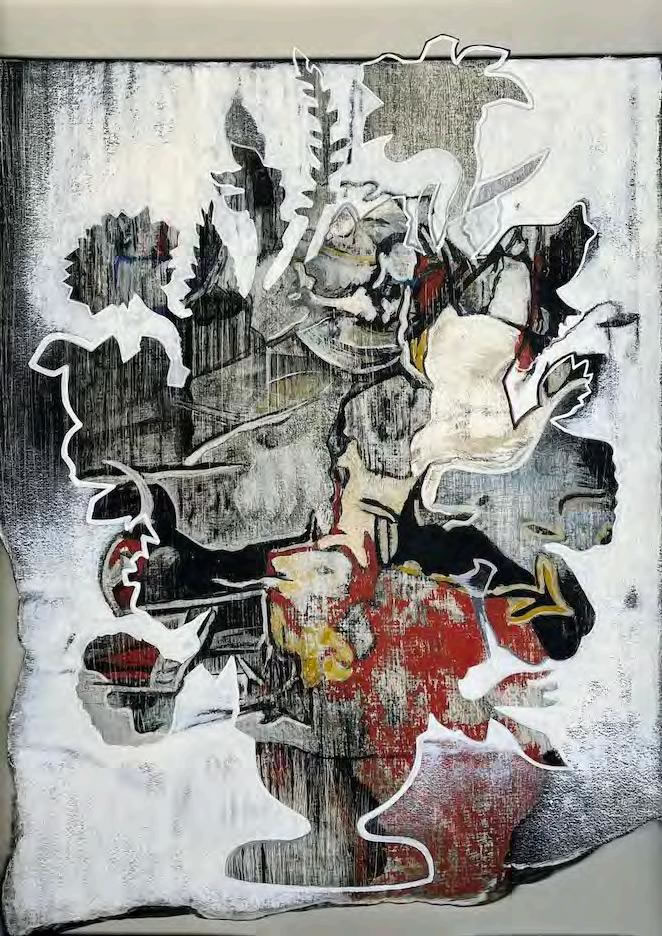
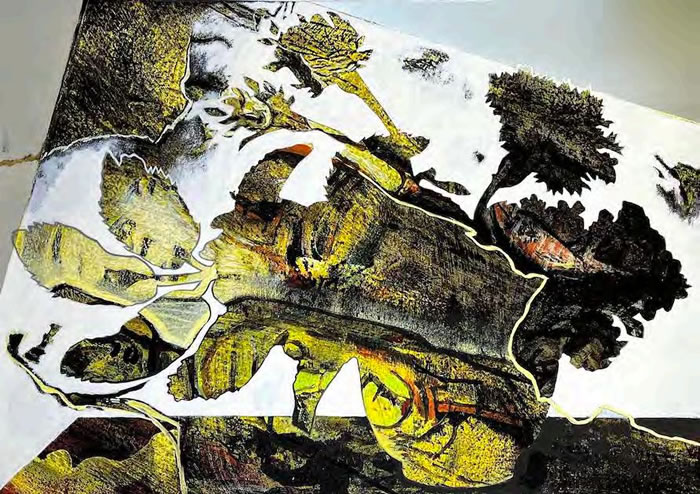
In the Light, Against the Wind 在光明中,逆风而行 2024, 378 x 508mm acrylic paint on paper 丙烯、纸本
花束作为无言的呐喊和绝望的呻吟,它们传达了干涸的眼泪或郁郁葱葱的庆祝,它们是欢迎和不受欢迎的震惊和敬畏的预兆
最近,露茜安进行了一系列意想不到的绘画,探索她未曾经历过的主题......目睹直接的身体暴力。虽然暴力事件的细节并不一样,但这些近距离接近,使她能够观察到随后的个人和社区反应。情感冲击和知识分子的愤慨都包含在一个统一的象征性姿态中,甚至被一种统一的象征性姿态所淹没——送花。
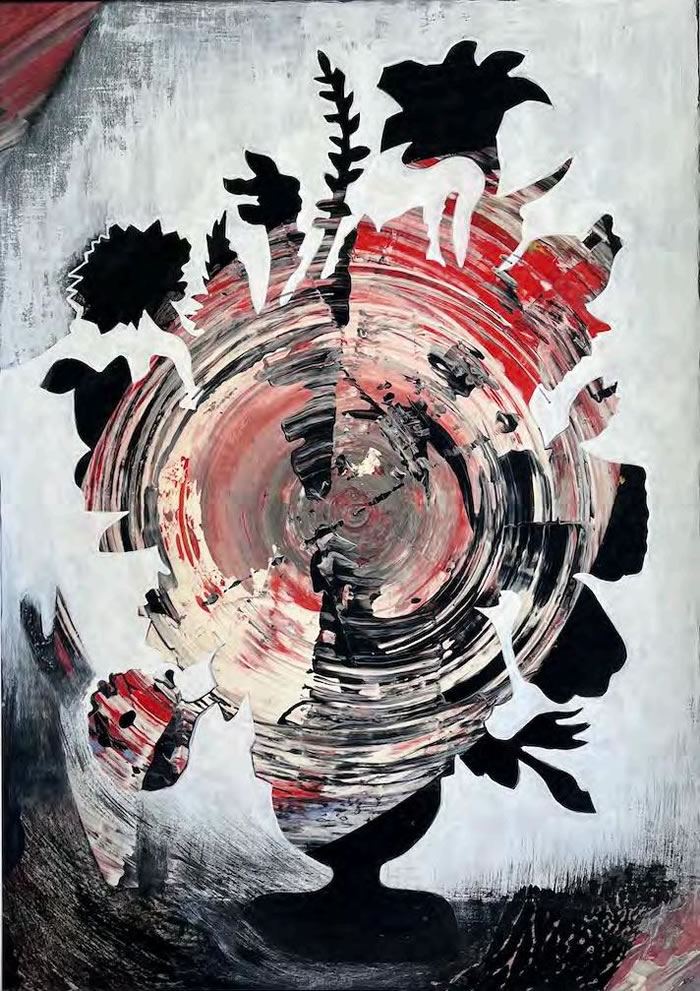
Target Achieved and Lost 目标实现又落空了 2023, 508 x 378mm acrylic paint on paper 丙烯、纸本
这当然是全球性的司空见惯,正如我们在电视上或街上看到的那样,在致命事故、自然灾害和大大小小的悲惨事件中。儿童的死亡、迫害和战争的摧残,无论其是名人或不知名人士,都引来了脆弱的、花瓣薄薄的鲜花,好似一剂灵丹妙药。因此,露茜安对研究鲜花和花束在过去到现在的人类互动中所扮演的角色产生了兴趣,包括送花束的各种情况,以及它们与阶级和性别的联系。献花的“场合”可以是非常私密的,也可以是非常公开的,可以是小的,也可以是盛大的,标志着快乐和愉快,悲伤或悲剧的事情。花束的象征意义与女性、美丽和爱情有关,但也象征着和平或战争时期的腐烂、衰老和灾难性死亡。
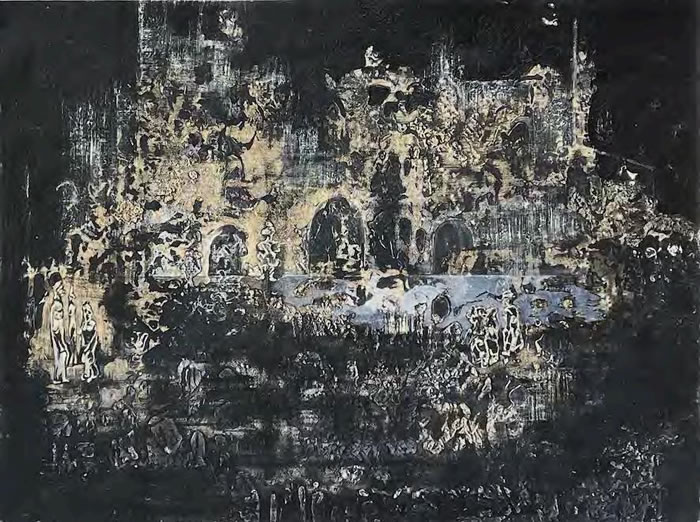
The Theatre of Life and Death 生死剧场 2021, 378 x 508mm acrylic paint on paper 丙烯、纸本
作为一种普遍的社会文化现象,花束的历史可以追溯到很久以前。在埃及,它们被列入陪葬品中,以帮助逝者进入来世。在古希腊,人们会向女性献上花束,以庆祝她们的美丽。在罗马时代,它们代表着奢华,放大了纵欲。因此,它们因其异教内涵而被早期基督教会禁止。然而,查理曼大帝在发现阿拉伯花园后进行了干预,随后创建了自己的、药用的和观赏的花卉的城堡花园。当教会最终与涉及鲜花的习俗和解时,这些美丽的花朵被作为花束呈现。从 15 世纪和 16 世纪的文艺复兴时期,再到 17 世纪的巴洛克时期,鲜花具有深刻的象征性美学意义, 进入18 世纪,它们也成为一种非语言交流的手段,其灵感来自奥斯曼帝国隐喻的花卉符号学代码。在19世纪资产阶级的欧洲,花束成为室内装饰的主要用品。从整个20世纪到现在进入了21世纪,花束的文化意义已经在无数的非正式和正式场合中不断增加。
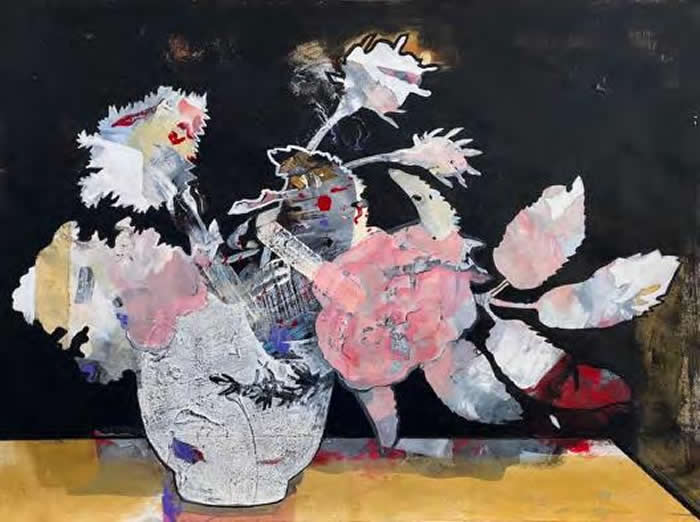
Another Direction 另一个方向 2023, 378 x 508mm acrylic paint on paper 丙烯、纸本
除了这种文化上的象征意义之外,花卉还在植物学、科学、医学和营养学等许多研究领域发挥了重要作用。事实上,花对人类生存的贡献具有开创性的重要性。开花的植物在1.3亿年前出现在地球上,因此,与它们关联的昆虫传粉者也是如此。两者的共存使果实和种子的产生成为可能,最终导致了包括人类在内的陆生哺乳动物的出现。
花卉的布置在矛盾中绚丽多彩,在“静物”的艺术概念中永垂不朽。因此,花束时尚地代表了生命的高度和死亡的深度。无论是手捧野花的简单聚会、还是对纪念性环境和场合的精心装饰都是如此。无论何时何地,花束都具有最能打动人心的审美形式和象征内容。
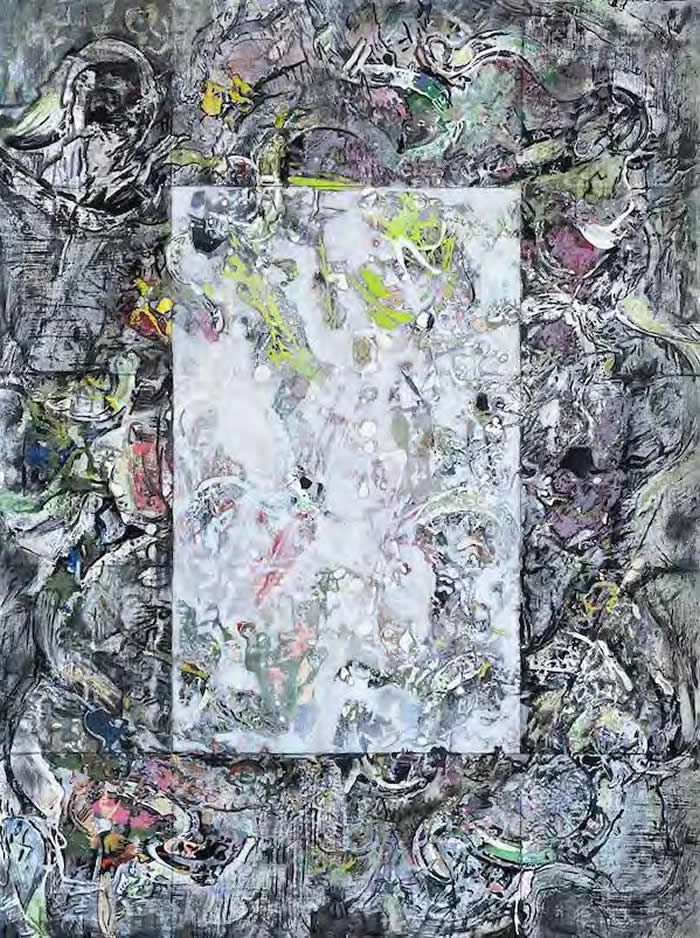
Paradise 乐园 2022, 508 x 378mm acrylic paint on paper 丙烯、纸本
因为花束作为一个概念是露茜安近期艺术作品的核心,所以她对花本身的引用完全在于将它们的轮廓表现为花瓶中的花束形式。这个轮廓结构中包含了对风景、女性和神话的具象或抽象描绘,这些都是她之前一些画作的一部分。通过这种方式,每件作品都是将选定的花束与不同的底色通过绘画完成的,因为它的历史语境和可能性既反映了生活的不同时刻,又具有新的意义。然后,在这个轮廓结构的内部和外部以不同的方式使用油画颜料来创作,将内部和外部统一在当下。
在此次展览中,花束主题的绘画与专注于风景、女性和神话的作品一起共同唤起了特定的记忆和情绪。然而,这些作品并没有局限于情感氛围。相反,它们以一种客观化的方式表明,生命存在于一种多维度地貌中,由我们的肉体、持续的景观以及物种的近距离和遥远的社会进化所构成。(中文翻译: 晋华)
Introduction to the exhibition
Lucienne’s solo exhibition The Bouquet Codicil at ICI LABAS Gallery, Beijing, features for the first time her latest series of paintings. While novel in terms of their dominant subject —the bouquet—these works are nevertheless situated on a continuum with artwork and research she has undertaken in past years. Typically, Lucienne moves from the general to the specific, in this instance, from primeval wonderings about the scale of the universe, to an assessment of human history, specifically of the place and role of women. Finally, she responds with numerous codicils (addendums or additions) to how we as individuals in human bodies and with human minds typically deal with the highs and lows of life and death. Consequently, the earlier paintings depict galactic landscapes. Close ups show they are populated with female archetypes who ponder the fate of humanity. And finally, the major series of seemingly limitless explorations of our physical realities (adding a codicil on each occasion) is enabled via the symbolic visual language of the bouquet.
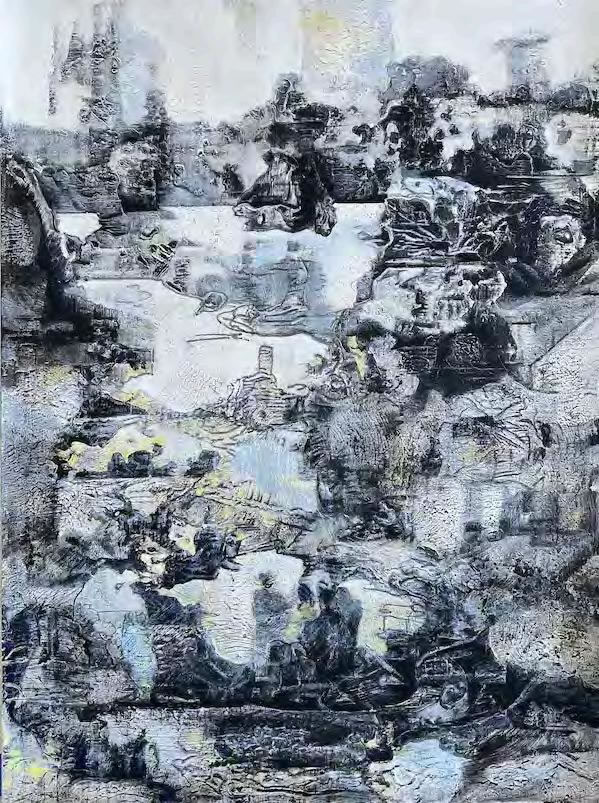
Lost in the Islands Sea 迷失在岛屿之海 2021, 508 x 378mm
Imaginary landscapes, primeval wonderment
The paintings for this series are illusionary visual narratives about journeys into matter, an exploration into the substance of primordial landscapes—the watery expanses of the sea, its rocky islands, the dark unknown or at times exploited depths under the surface of the planets and our earth, the streaking sunlight across deserts to find an oasis either of the soil or mind. And beyond it all, the immensity of the cosmos, its planets, stars, asteroids, a dizzying continuous motion, the entropy of the universe. Sometime, small human figures appear within, being spectators of, witnesses to the unfolding stories that play out on this infinite stage.
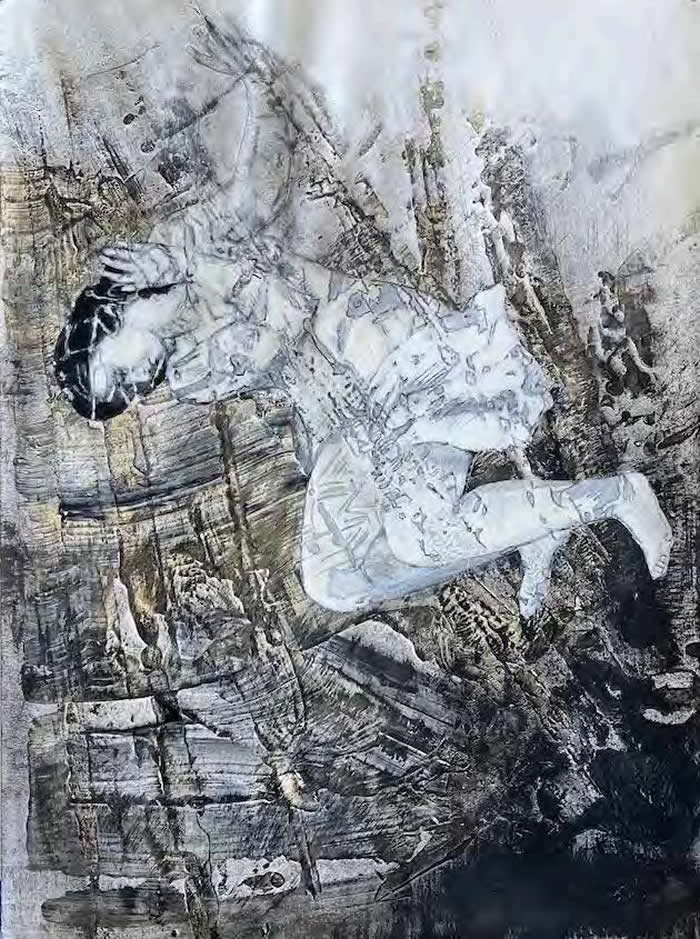
To Survive 为了生存 2022, 508 x 378mm
Humanity as female archetypes
These works depict archetypal female figures. Specifically chosen as they are exemplars of extremities of the human condition. Each woman was dispossessed of her powers. The list is long of women who, in the past and the present, endured mistrust and betrayal, leading to violence against them, even murder. And their fall from grace, their diminished status, has shaped our consciousness and expectations of womanhood ever since. Lucienne reinterprets the trials, tribulations, and triumphs of archetypes such as the Mesopotamian female deity Inanna, Eve from the Book of Genesis in the Hebrew Bible, or the Roman goddess Venus, through appropriation of their earlier representations in historical paintings, restoring their dignity and authority and enabling them to be symbolically and practically inspirational today. Humanity is redolent with such experiences. Men, women, children laugh, cry, suffer and yet inevitably achieve much more than mere survival.
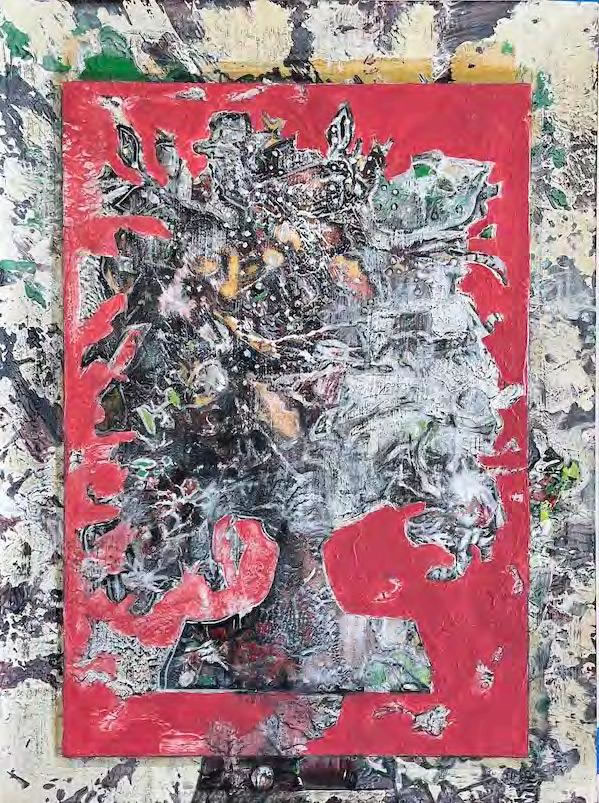
Champagne of Stones 石头的香槟 2023, 508 x 378mm
Bouquets as unspoken shouts and desperate whispers, they convey dry tears or lush celebration and they are the harbingers of welcome and unwelcome shock and awe
Most recently, Lucienne started an unexpected series of paintings exploring a subject new to her experience…the witnessing of direct physical violence. Although the specifics of the violent incident are not essential, it was sufficiently close to enable her to observe the ensuing individual and community reactions. Emotional impact and intellectual indignation were each subsumed within, even overwhelmed by, a uniform symbolic gesture—the giving of bouquets of flowers.
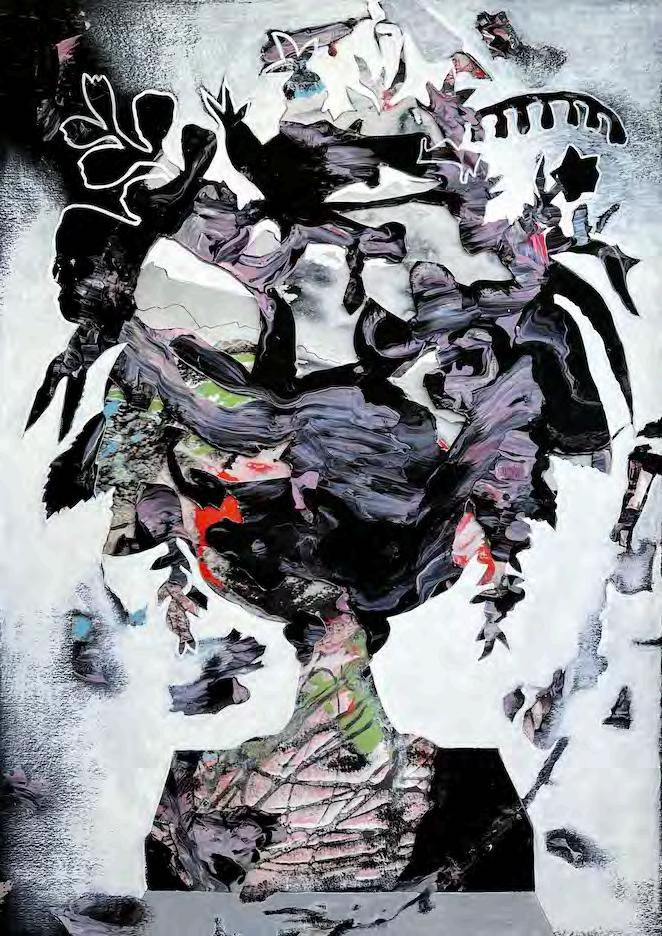
Abundance Amongst the Ice 冰层中的丰富 2023, 508 x 357mm
This is of course universally commonplace, as we see on television or on the street, at fatal accidents, natural disasters, and tragic events large and small. The death of children, the blight of persecution and war, of celebrities and unknown persons, all attract the fragile, petal thin panacea of flowers. Consequently Lucienne became interested in researching the role flowers and bouquets have played in human interactions from the past to the present day, including the various situations in which bouquets are given, as well as their affiliation with class and gender. ‘The occasion’ to offer a bouquet can be very personal or very public, small or grand, marking something joyful and pleasant, sad or tragic. The symbolism of the bouquet has been linked to women, to beauty and love, but has also signified decay, aging and catastrophic death, in times of peace or war.
A widespread socio-cultural phenomenon, bouquets go far back in history. In Egypt they were included amongst burial objects, to help in the passage to the afterlife. In Ancient Greece, bouquets would be offered to women, in celebration of their beauty. In Roman times they represented voluptuous opulence, amplifying indulgence. Consequently, they were banned for their pagan connotations by the early Christian church. However, Charlemagne intervened after discovering Arabic gardens, and subsequently created his own castle garden of medicinal and ornamental flowers. When the Church eventually became reconciled with customs involving flowers, these blooms of beauty were presented as bouquets. From the 15th and 16th c Renaissance and then into the 17th c Baroque periods, flowers accrued deeply symbolic aesthetic significance, and in the 18th c, they also came to be a means of non-verbal communication, taking inspiration from the Ottoman Empire’s hidden floral semiotic codes. In 19th century bourgeois Europe, bouquets became a major focus of interior decoration. And throughout the 20th and now into the 21stc the cultural significance of bouquets has continued to grow across countless informal and formal circumstances.
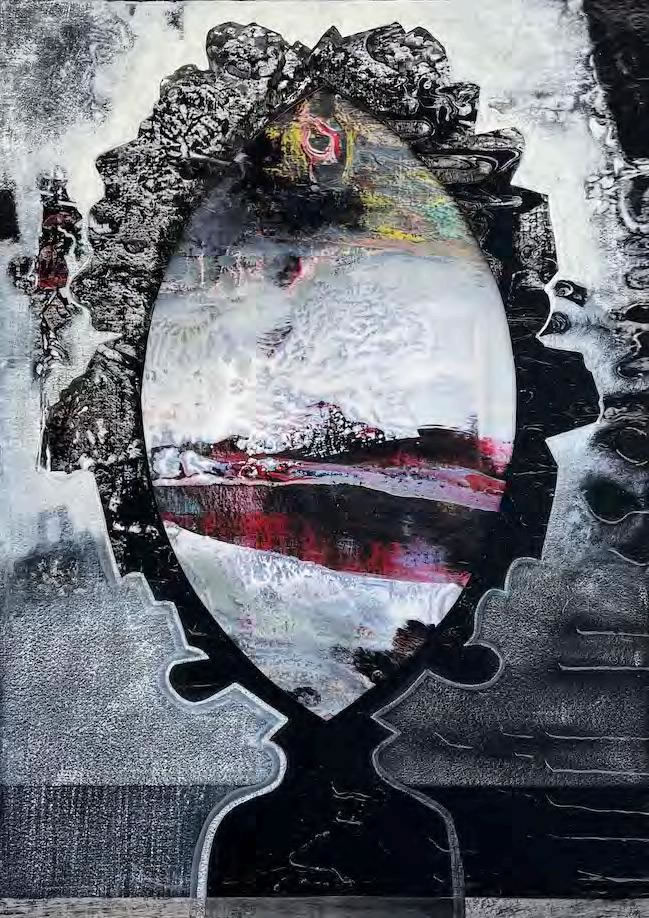
Red River City 红河城 2022, 508 x 357mm
As well as this cultural symbolic significance, flowers have been instrumental in many areas of research such as botany, science, medicine, and nutrition. The contribution of flowers to human existence is in fact of seminal importance. Flowering plants emerged on Planet Earth 130 million years ago, and consequently so did their associated insect pollinators. The co-existence of each enabled the production of fruit and seed, which eventually led to the emergence of terrestrial mammals including humans.
The arrangement of flowers is resplendent in contradictions, immortalised in the artistic concept of the ‘still life’. Consequently, bouquets stylishly represent the heights of life and depths of death. This remains true whether they be a simple gathering of wildflowers in the hand or an elaborate accoutrement to a monumental setting and occasion. No matter where or when, bouquets possess the aesthetic form and symbolic content which most powerfully strikes at the heart.
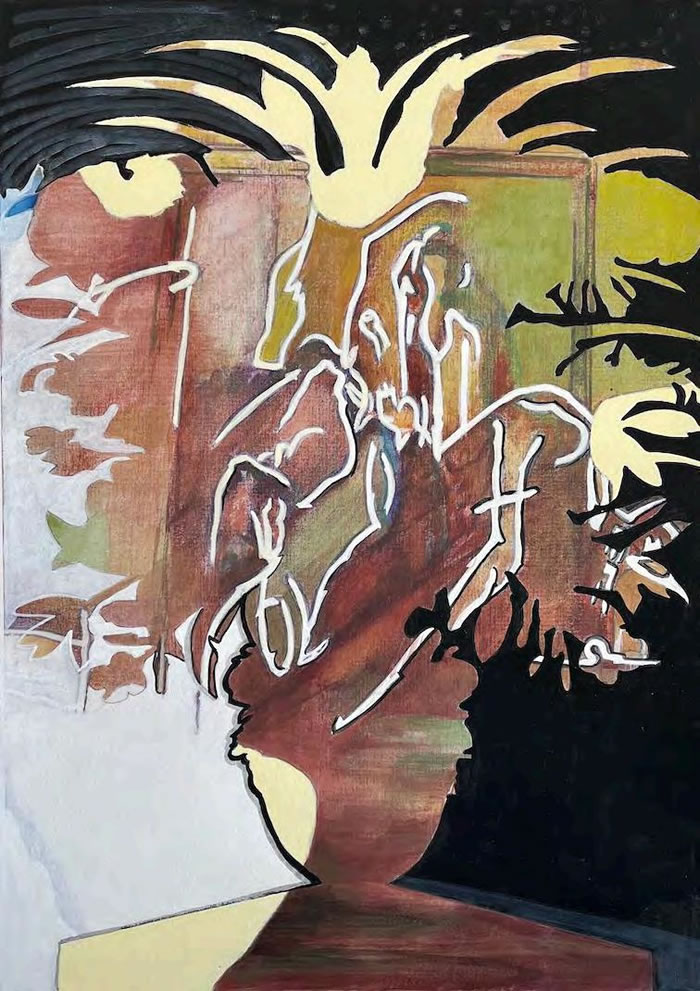
Making Breaking 建构_解构 2023, 508 x 357mm
Because the bouquet as a concept is central to Lucienne’s recent artworks, her reference to the flowers themselves lies exclusively in the representation of their silhouette as a bouquet form in a vase. Contained within this outline are figurative or abstracted depictions of landscapes, women and myths that are sections of some of her previous paintings. In this way, each work is created by pairing a selected bouquet with a different underlay painting chosen because of its historic context and potential for both reflecting various moments lived and carrying new meaning forward. Paint is then applied variously inside and outside of this profile, uniting inner and outer in the present.
In this exhibition, bouquet paintings, alongside works focussing on landscapes, women and myths altogether conspire to conjure up particular memories and moods. However, the works do not surrender to an emotional atmospheric. Rather they demonstrate in an objectified way that life exists in a multidimensional terrain made up of our physical bodies, the sustaining landscape and through the close and distant socialisation of species.